This home is being built (perhaps rebuilt) on a small plot in the
old section of Kyoto, Japan, near the Ryokan (traditional Japanese Inn)
where I stayed. The streets here are tiny - barely large enough to drive
a small truck heaped with building supplies. The first
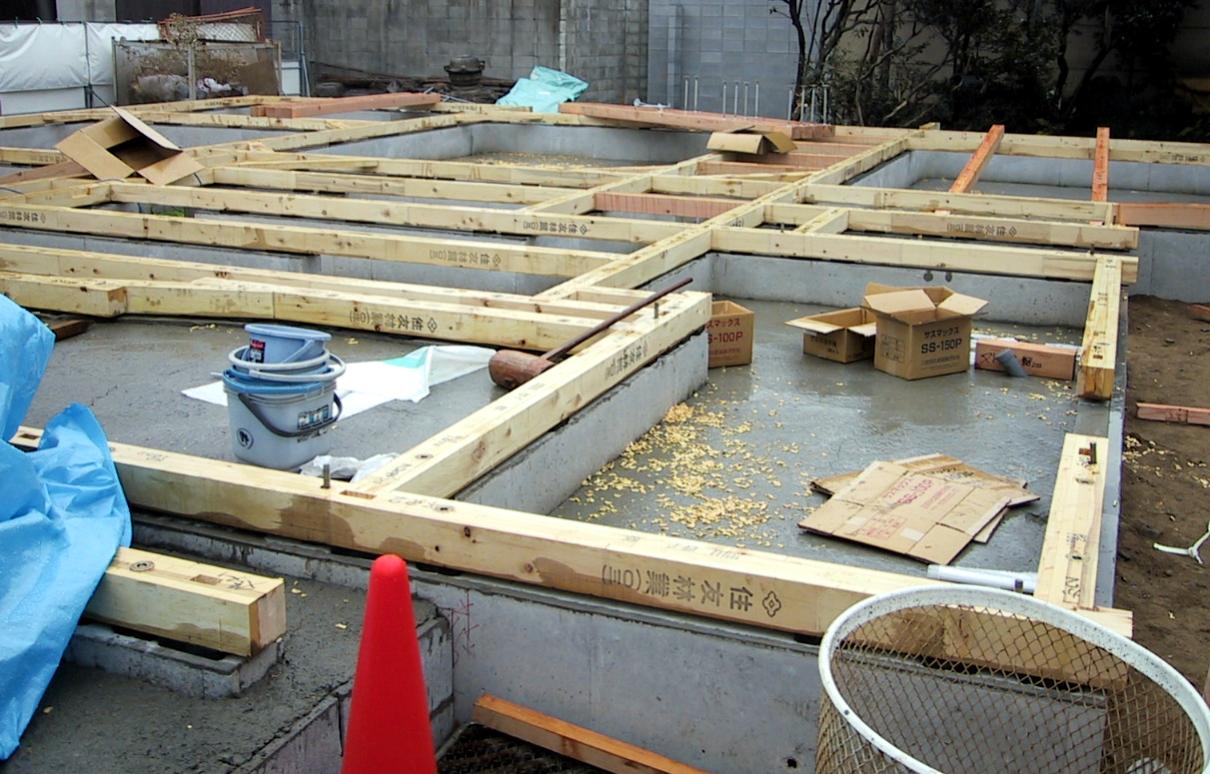
picture shows the beginning of the framing. Notice the mortise and
tenon type connections, pounded together with a giant wooden mallet. The
timber is of high quality, but does not appear to be treated with preservative
the way mud sills are treated in the U.S. The timber sits atop a modern
concrete slap and is anchored to it with bolts cast into place. Craftsmanship
is evident in the smooth, precise cuts on every piece.
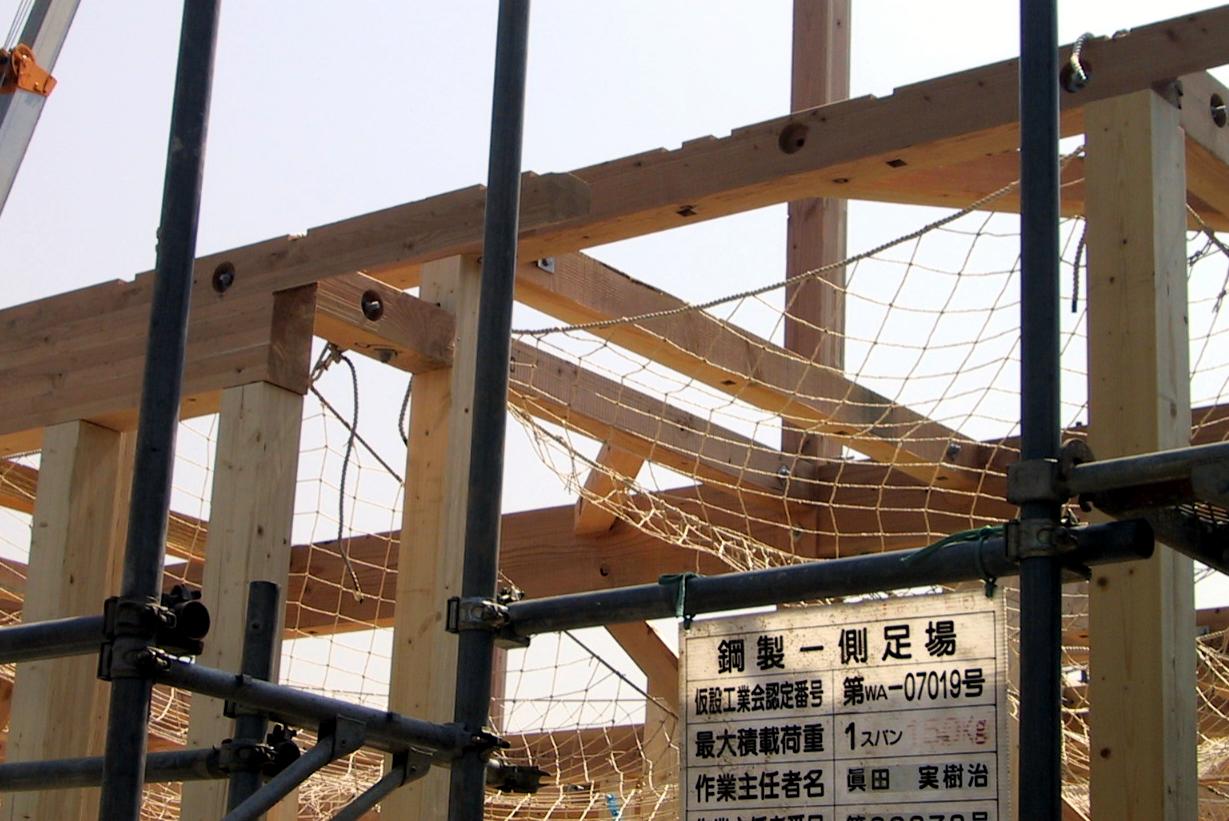
A couple of days later we can see a continuation
of the modified post/beam construction. Bolts with Tee-nuts and steel
anchor plates augment the mortise and tenon joints.
What I learned later from Prof. Ken Sasaki at U. Tokyo is that the addition of steel brackets is a post-Kobe-earthquake requirement. The traditional construction, with no plywood sheathing and few diagonal braces, has been found to give adequate stiffness only if exceptionally close tolerances are achieved in the mortise and tenon.