| * The iLoft project is made possible through collaboration with the iWork group of the Stanford University Computer Science Department. Research and development of the systems and furnishings is carried forward as a part of the WGLN iSpace consortium. This effort is funded by the Center for Design Research, the Stanford Learning Lab and the Wallenberg Global Learning Network. |
|
|
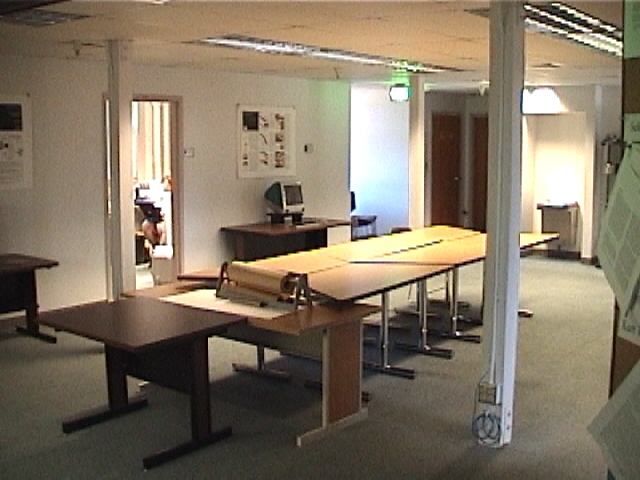
This is the first floor space at the Center for Design Research (CDR). Often used as a research group meeting space, lunchroom, study space, and sometimes a seminar venue. |
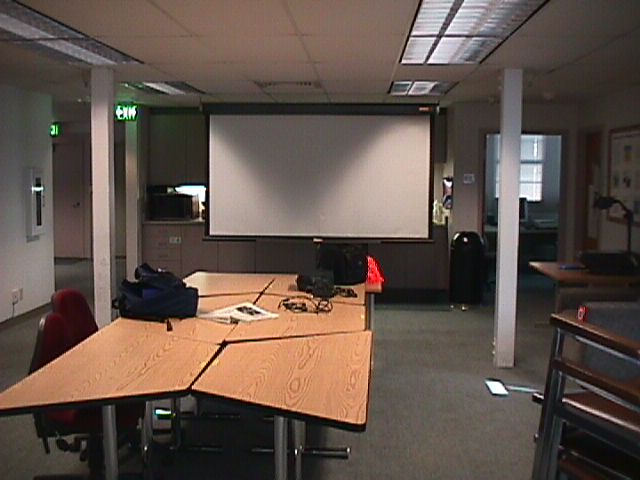 |
Another view of the first floor, this time from the reverse angle to see the room configured for a presentation. |
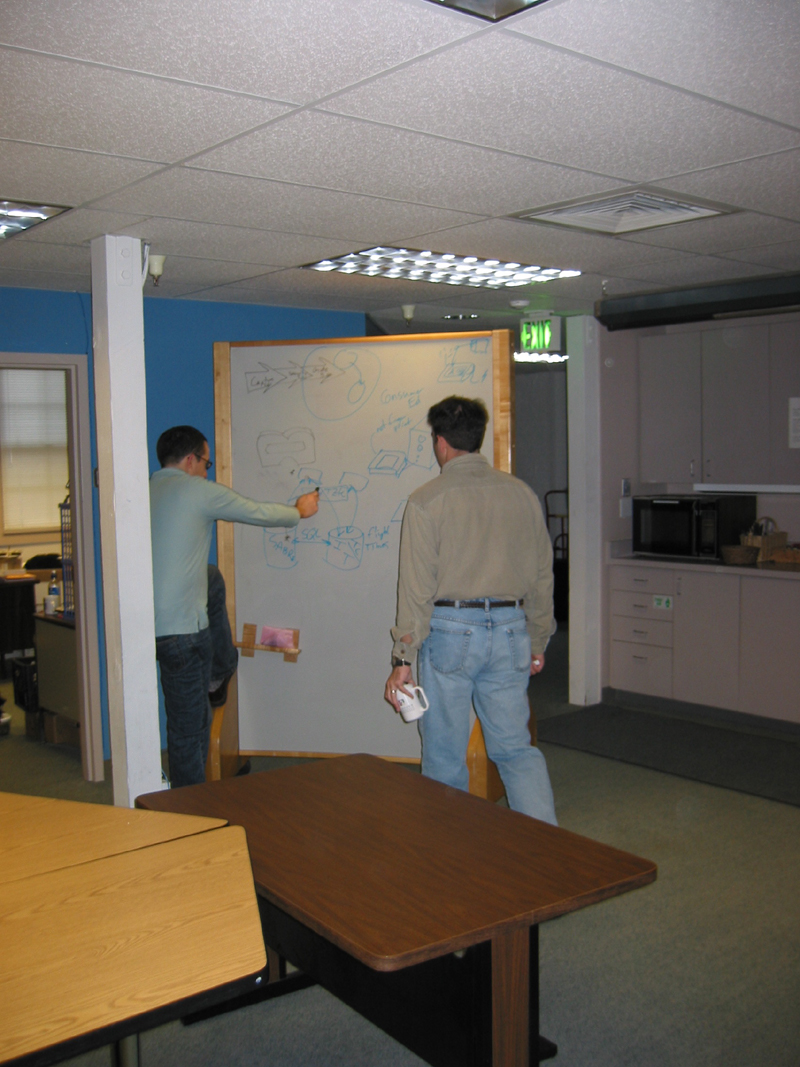 |
Here two engineering students are discussing a problem from class. One of the students is a CDR resident; his office is just to the left of the whiteboard. The board is slightly curved, magnetic, and can be rolled around, though it is heavy enough to stay in place when writing on it. Impromptu meetings regarding course projects and research are common at CDR. |
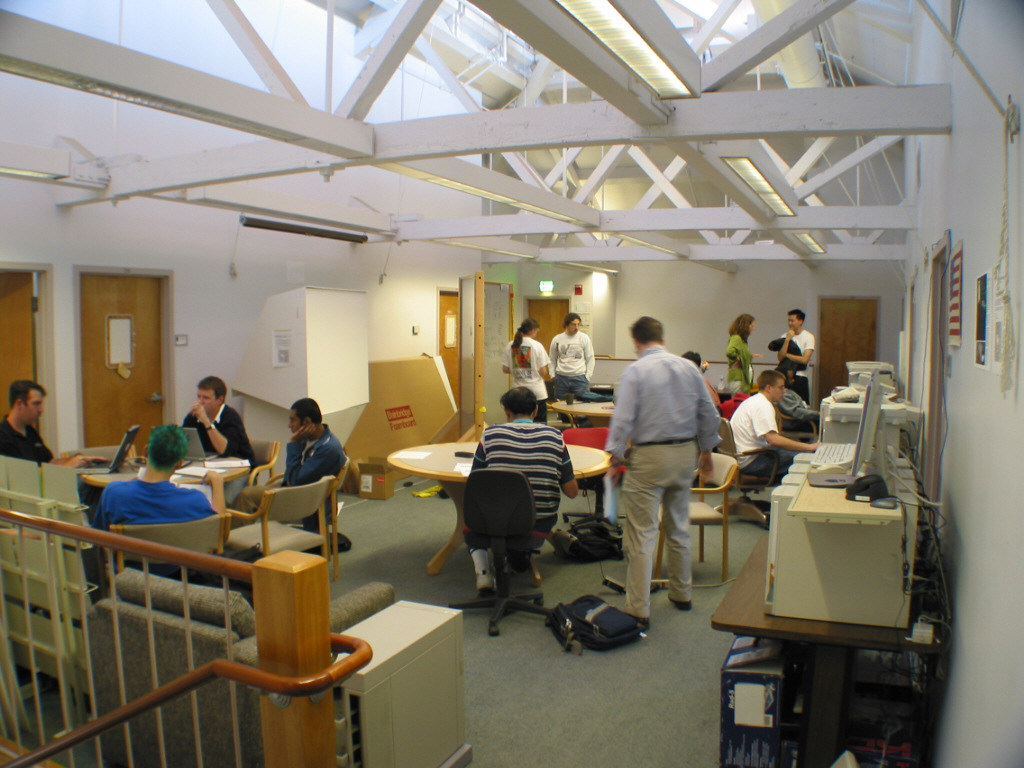 |
This is a recent picture of the iLoft space that shows a variety of simultaneous events. From left: Emerging Technologies Seminar, ME Graduate Student Project Team discussion, BMW Design Research Team Meeting, PhD student discussion, Student Online Videoconference. |
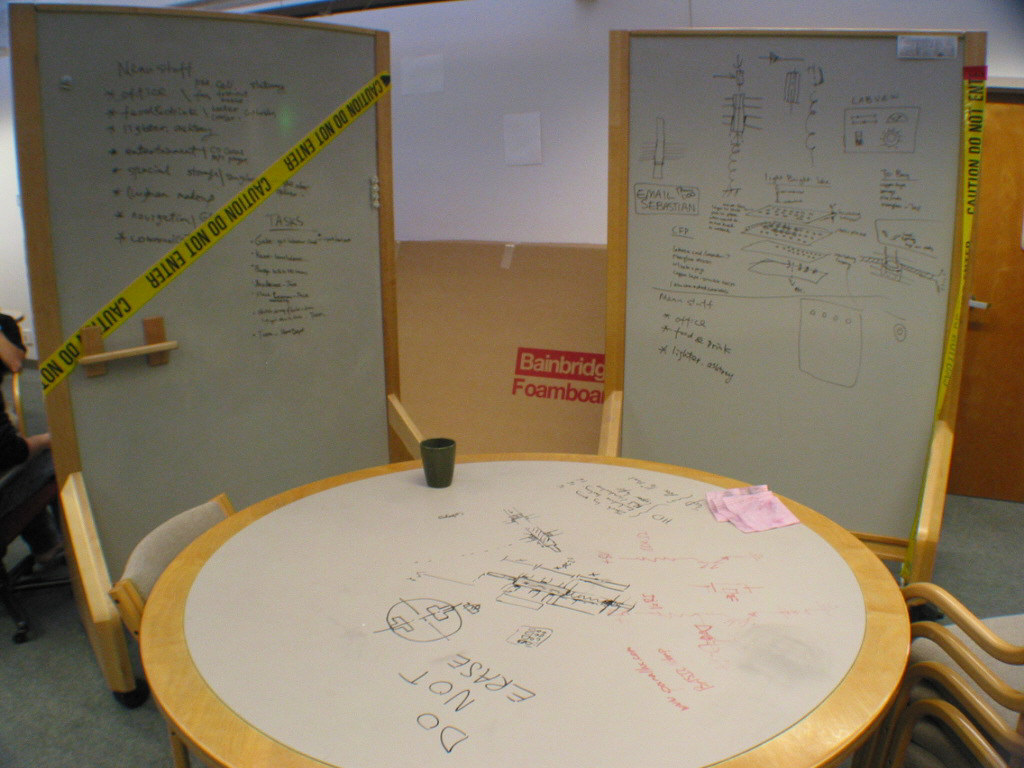 |
Tables and moveable whiteboards currently installed in the iLoft provide a variety of physical writing surfaces. One challenge for future iLoft development will be finding ways to integrate physical and digital work surfaces. A related question: how to make information persistent in the space, so that it can be recalled and redisplayed as needed. |
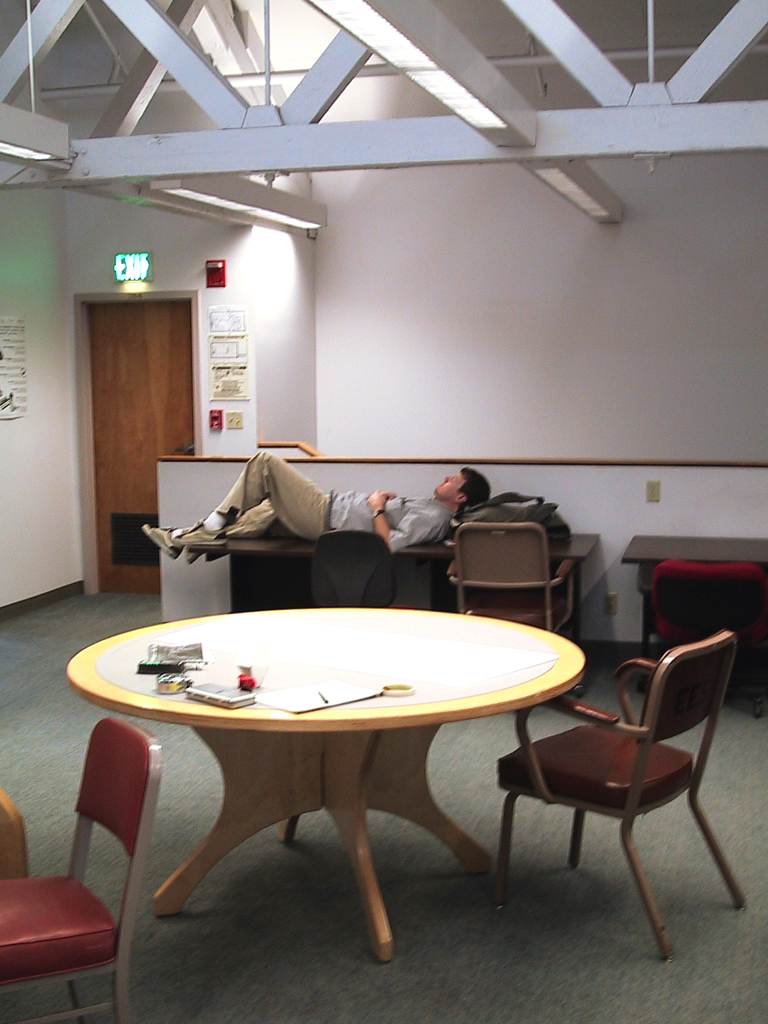 |
Sometimes even designers need to take a break. Further proof of the iLoft's versatility in supporting modes of activity... |
|
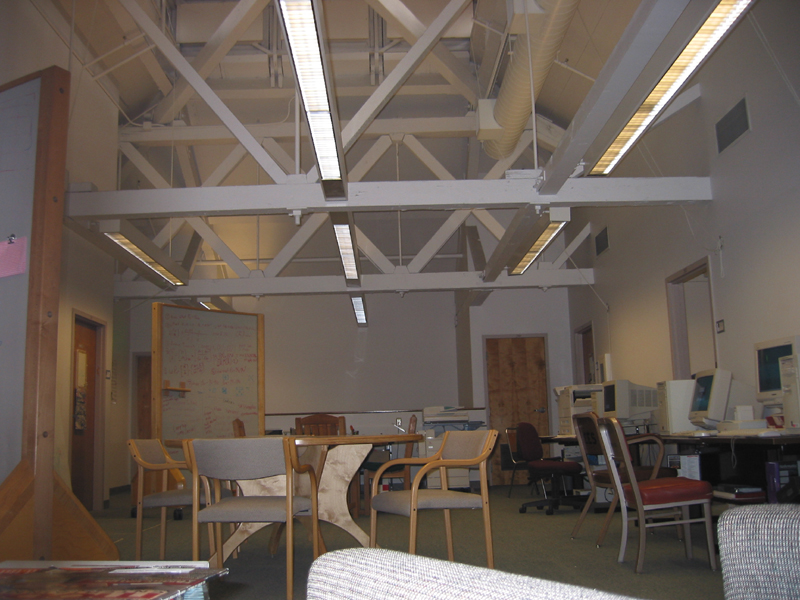
This is a view of the iLoft space during early phases of construction. The photo is taken from the stairs leading to the second floor so you can see the detail of the high loft space in the ceiling. CDR is in a 2-story building, and the iLoft will be on the second floor. There are windows high in the ceiling to allow natural light during the day. |
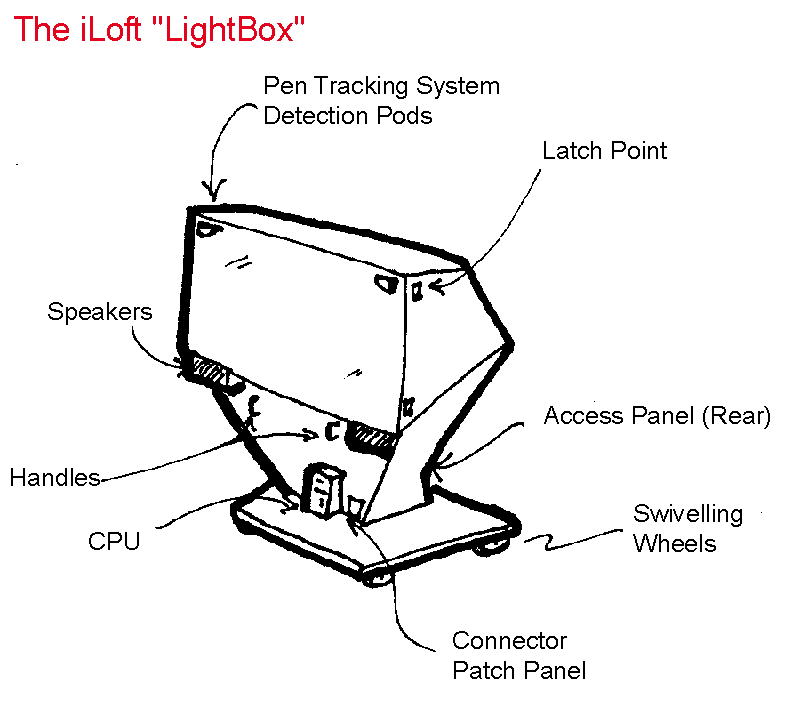 |
A key component in the early phases of the iLoft design, the "LightBox", will be an interactive rear-projection display surface. We anticipate that eventually three LightBoxes will be installed in the iLoft. Software developed in the Stanford CS department will enable these screens to be used either independently by small groups or together as a single large writable worksurface. All the units will be mobile so that this space will be highly reconfigurable. |
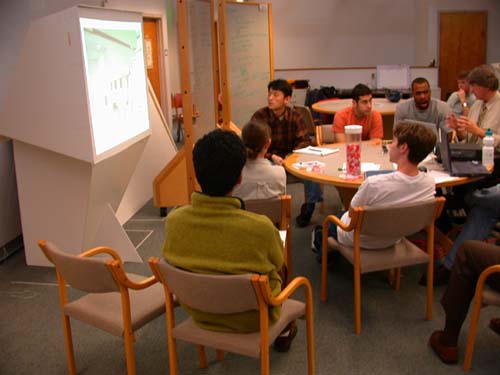 |
A fullscale foamcore concept mockup of the "LightBox" is visible at the left. Here the DesignX research group, headed by Prof. Larry Leifer, is using the mockup as a projection surface in one of its meetings. Early piloting of this type has already provided useful feedback for the initial design. A team of students is currently working on the first version of the LightBox. |
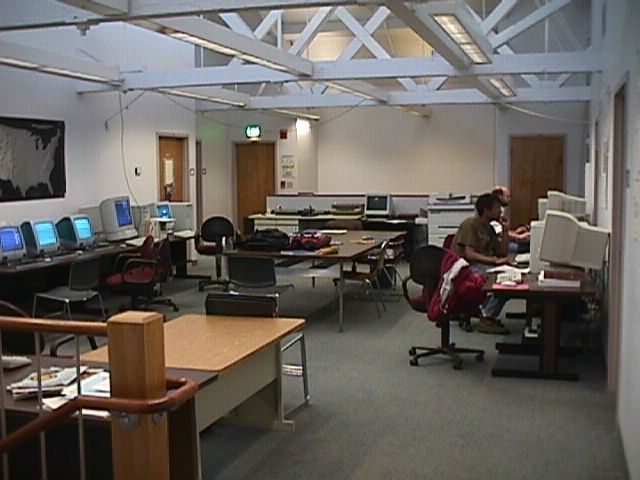 |
A view of the second floor as it was originally configured. This was largely a computer lab area where students did individualized work. The table in the middle was often the location for group meetings for class projects, but typically only a small portion was used by a group of three, while the rest went unused. In the new configuration there will be two round tables so that two teams could be supported at once. |
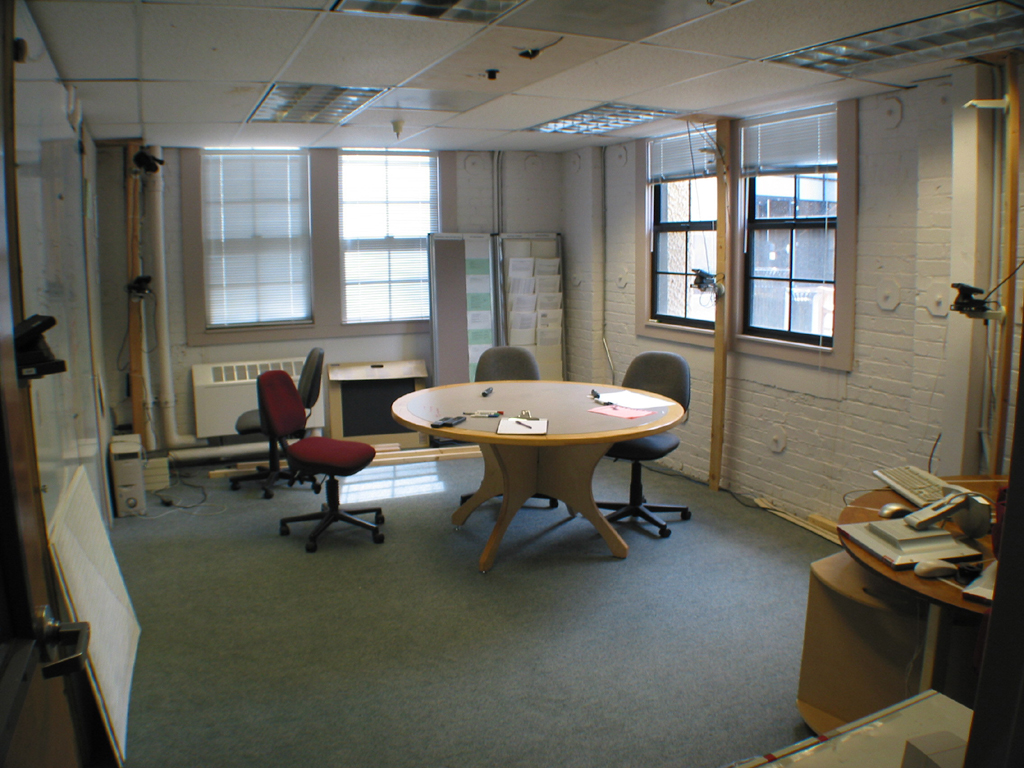 |
This is a view through the door of the Design Observatory, which is in a back area of the first floor at CDR. This space was a precursor to the iLoft. It was designed to allow research students to study design teams at work, while at the same time providing a room with advanced tools for conceptual design work. |
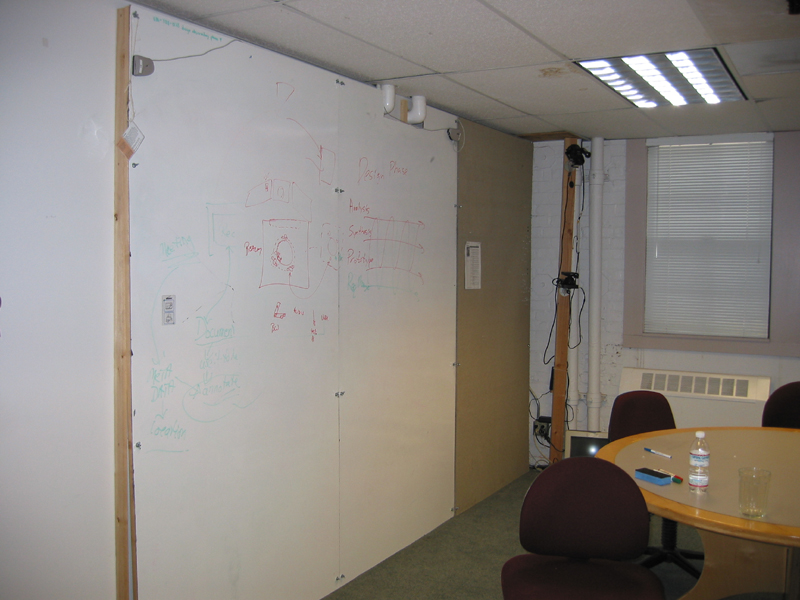 |
A second view of the Design Observatory from a different angle. This shows the whiteboard and pinboard surface that is installed along one wall; this board accommodates electronic capture and realtime webcasting of what is written on it. There is currently no projection equipment install in this space, but a ceiling-mounted system is planned. |
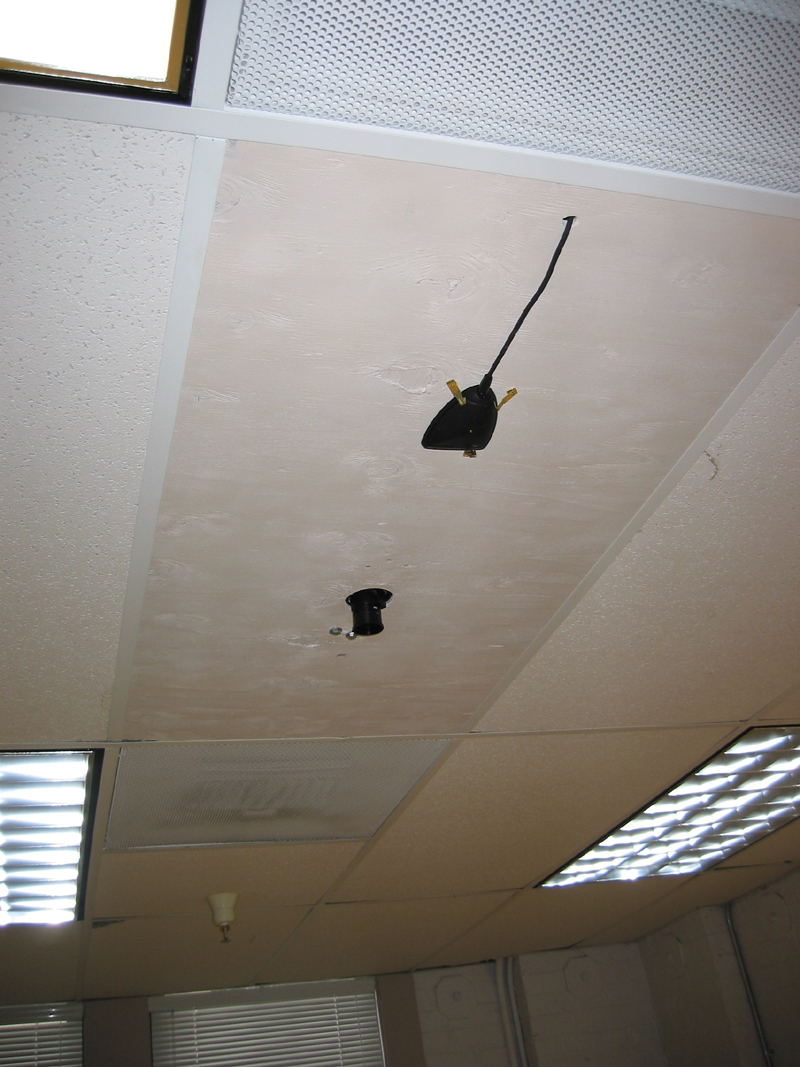 |
A series of video camera (this one partially concealed in the ceiling to provide a view of the tabletop) and microphones (ceiling and wireless) allow recording of design team activity. This is the primary function for the Design Observatory. |
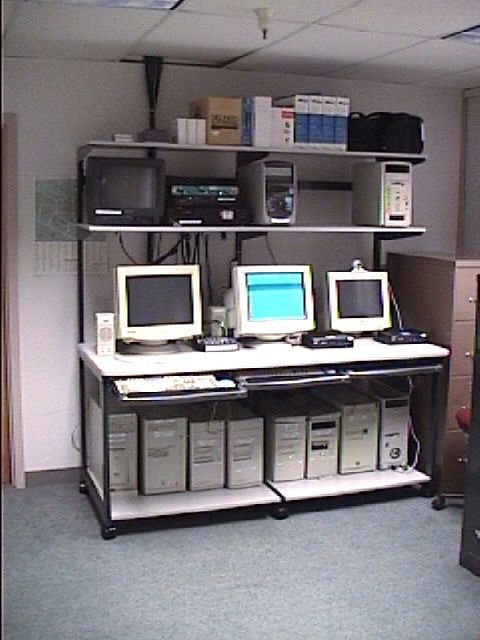 |
The various recording systems feed into a monitoring console just outside the Observatory room. Additional systems, such as video webcameras, are also remotely supported by servers in this equipment rack. Researchers can make digital recordings and monitor sessions in realtime without disturbing experimental subjects. |
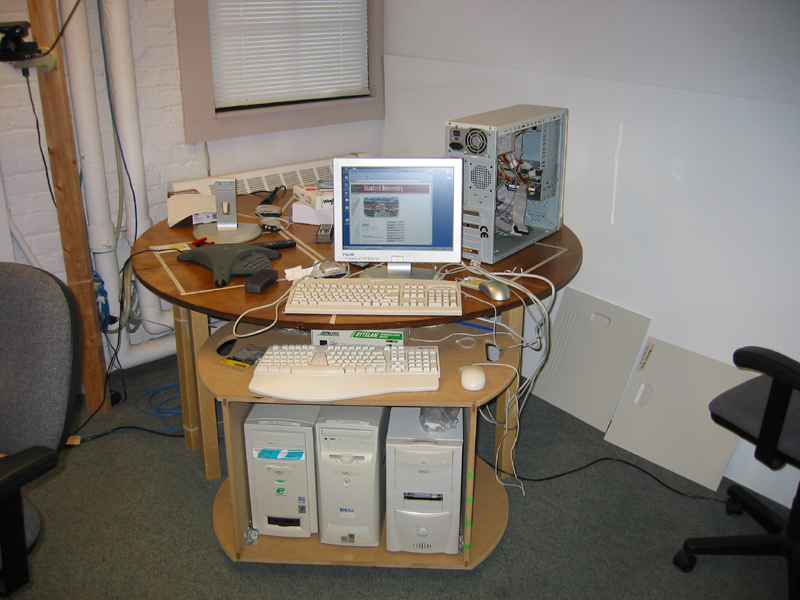 |
This table is a prototype used in Andrew Milne's research investigations. The table top writing/sketching capture systems are integrated in the PeriScope software system. This setup was developed to explore new methods for supporting distributed engineering design teams. |
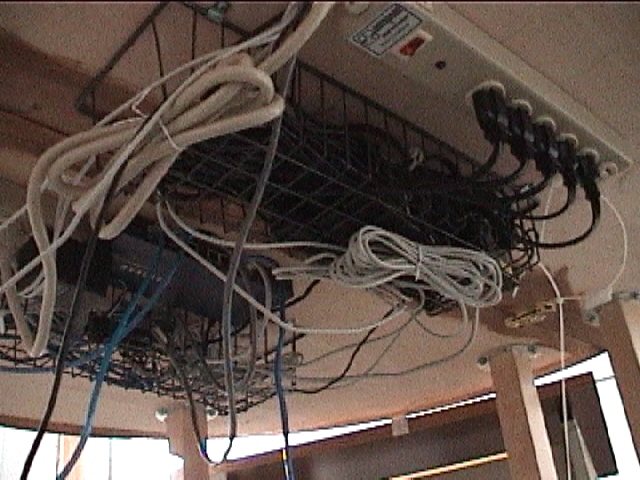 |
One of the prime challenges in the integration of technology into the Observatory space is how to effectively accommodate the physical technology requirements so that the systems are unobtrusive. This photo shows the underside of the PeriScope table, revealing some of the wiring complexity. |
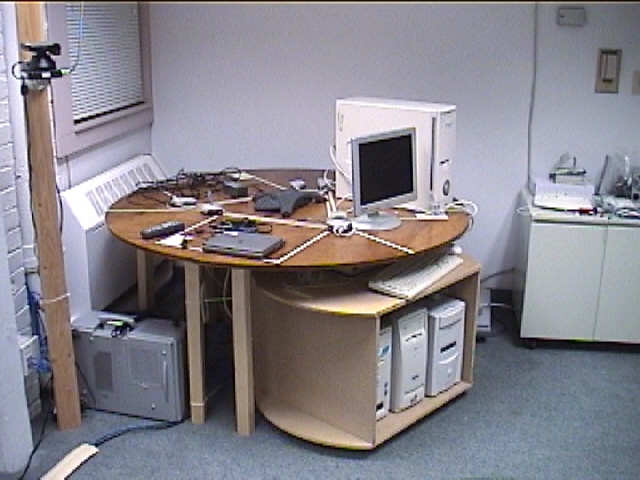 |
A different view of the cart designed to support desktop PCs in a mobile fashion. By installing computing machines under the table, a cleaner interface using flatpanel LCD displays leaves more room on the table top for paper-based sketching and writing. |
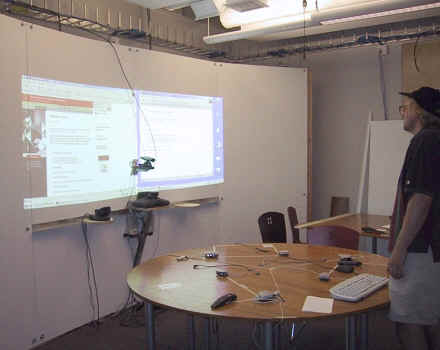 |
A view of the Stanford Learning Lab's Vining iSpace in the Green Earth Sciences Building. This space will function as the "remote" site for experiments that simulate distributed engineering design team activity, where some members of an engineering group work from a geographically distant location. Note the Periscope table in the photo; it is a twin of the table installed in the Design Observatory. |